
Wing - Drone delivery
Wing Aviation LLCShopping
4.8828.00 Reviews
- Version
- Varies With Device
- Installs
- 100.00K
- Age Rating
- Everyone
Screenshots
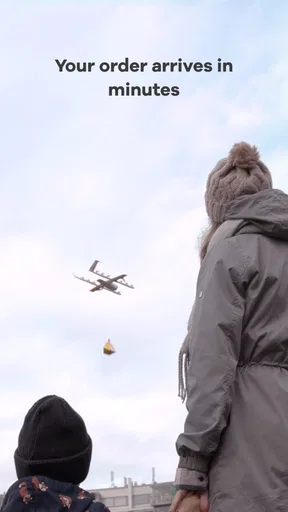
Our Review of Wing - Drone delivery
 Analysis by Appyee
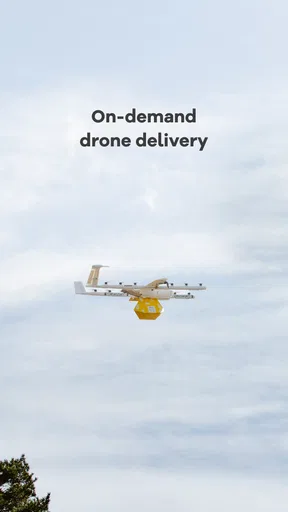
Getting a small order delivered by air sounds like a novelty until you are waiting at home for something you need quickly. Wing is a shopping app from Wing Aviation LLC built around that exact situation: instead of sending a conventional car or van, it connects an order with a drone delivery service where the service is available. I found the idea easy to understand, but the real question is not whether drone delivery looks futuristic. It is whether it is useful enough in an ordinary week to justify choosing it over a normal store trip or a standard delivery option.
The app is free to download and is aimed at Everyone, which makes trying it relatively low-risk. It sits in the shopping category rather than behaving like a general marketplace with an enormous catalog. Its purpose is narrower and more practical: help you arrange a delivery to your home in minutes. That focus is its strongest quality, but it also creates the main limitation. The experience depends heavily on whether the service covers your location and whether the items you want are suitable for this kind of delivery.
How Wing feels when you use it for a real order
My first impression is that Wing makes the delivery method part of the shopping decision. With a conventional delivery app, I usually think about the retailer, the basket, the delivery window and the final cost. Here, I also have to think about whether the order can travel by drone and whether my home is a workable drop-off point. That makes the app feel less like a replacement for every shopping service and more like a focused tool for quick, lightweight purchases.
A realistic use case is an afternoon at home when you have run out of a small household item, need a snack or want to avoid interrupting work for a short shopping trip. In that situation, the appeal is obvious. I can place the order without getting in the car, and the aerial delivery concept is more than decoration: it is intended to shorten the journey between a nearby retail source and the customer. For a small, time-sensitive purchase, that can be more convenient than waiting for a regular route.
The app’s store summary promises delivery to your home in minutes, but I would treat that as the intended experience rather than a guarantee for every order. Delivery speed is shaped by availability, distance, weather, the item, and the practical conditions around the destination. A careful user should check the current delivery estimate shown during the order process instead of assuming that every basket will arrive equally quickly.
That distinction matters because the app is not simply a faster version of online shopping. It is a location-dependent service. If the delivery option does not appear for your address, the app cannot solve the problem by itself. If you live outside an active service area, a nearby store, a standard retailer app or a conventional courier will probably be more useful. I see checking coverage as the first step, not as an annoying detail to discover after building a basket.
The cost question is refreshingly simple at the app level
Wing is free to download, so there is no purchase required just to install it or explore the service. That is the clearest verified part of the value proposition. It lets a curious user assess whether the service works at home without paying for access to the app itself. The free entry point is especially helpful here because drone delivery is not equally useful in every neighborhood.
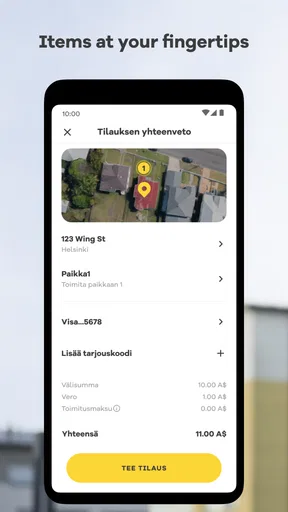
However, free access to the app should not be confused with a promise that every delivery or item will cost nothing. The app may present order-related charges, retailer pricing or other checkout details depending on the transaction, and those are the figures I would inspect before confirming an order. I would compare the final total with the cost of walking or driving to the store, using a normal delivery service, or adding the item to a larger planned order.
This is where Wing’s value becomes personal. If I am already passing a store, paying for a drone delivery may make little sense. If the alternative is losing time, leaving children unattended, or stopping work for a small purchase, the same order can feel worthwhile even when it is not the cheapest route. The app’s free download removes one barrier, but it does not automatically make every individual delivery good value.
What the delivery format does well
The strongest benefit is convenience without a full shopping trip. A drone can be a sensible middle ground between going out personally and waiting for a larger delivery route. I would use the service for a compact order where speed matters more than browsing. That might include a forgotten ingredient, a small personal-care item or something needed to finish a task at home.
There is also a useful psychological advantage: the app encourages me to think in terms of immediate need rather than a large weekly basket. That can reduce the temptation to overbuy simply to meet a delivery minimum. On the other hand, frequent small orders can become poor value if the checkout total repeatedly includes charges or if I could easily combine purchases into one regular trip. The convenience is real, but it rewards selective use rather than automatic use.
Another non-obvious strength is the way the service can fit around immovable routines. Someone working from home may not want to pause a meeting or lose a productive hour for a short errand. A caregiver may value staying close to the house. A person without access to a car may find a rapid local delivery more practical than arranging transport. In those cases, the time saved is not just a luxury; it can remove a genuine obstacle.
I also think the app is best judged by the complete handoff, not only by the flight. A delivery is successful when I can identify where the order will arrive, collect it safely and avoid confusion at home. Before ordering, I would choose a clear, accessible location and make sure I can respond when the delivery is close. Treating the drop-off as part of the workflow is a useful habit because the unusual delivery method may require more attention than a parcel left at a door.
Where the experience can become inconvenient
The biggest trade-off is flexibility. A supermarket or broad shopping marketplace gives me many ways to substitute products, expand a basket or compare brands. A drone-focused service is more constrained. The app is valuable when the available selection matches a specific immediate need, but it is not the place I would start for a full grocery shop, a large household restock or an order requiring careful product comparison.
Weight, size and shape are practical constraints even when they are not obvious from the idea of “shopping.” A drone delivery is naturally better suited to a small order than to bulky supplies. I would not plan around it for large cleaning packages, heavy drinks or anything that might be awkward to carry through the delivery process. If the basket grows beyond a few convenient items, a normal delivery vehicle becomes the more sensible tool.
Weather and operating conditions are another reason not to build an urgent plan around one delivery method. A conventional store visit may be unpleasant in bad weather, but it is often more predictable than relying on an aerial service. If I need an item for a fixed appointment, I would keep a backup plan rather than assume the fastest advertised experience will always be available.
The novelty can also work against the app. It is easy to focus on watching a drone arrive and forget to ask whether the order itself is a good deal. I would avoid placing an unnecessary order simply because the technology is interesting. The best use is when the delivery solves a real problem; the weakest use is when the flight is the reason for buying something I did not need.
Three habits that make the service more useful
First, I would check the address and delivery conditions before deciding what to buy. Do not begin with a long wish list. Start with one small, genuinely useful item and see whether the app offers a practical route to your home. This approach quickly reveals whether the service fits your location and routine without turning the first attempt into an expensive experiment.
Second, I would compare the final checkout amount with the value of my time, not just with the shelf price. If a short walk takes ten minutes, drone delivery may be hard to justify. If the same trip requires a long drive, parking and an interruption to work, the calculation changes. This is a more honest way to evaluate convenience than calling every fast delivery a bargain.
Third, I would use the app for planned “gap” purchases rather than replacing all shopping. Keeping a short mental list of small items that would genuinely help today makes the service more efficient. It also prevents a common mistake: opening a delivery app without a clear need and gradually building a basket that would have been cheaper and simpler during the next regular shop.
A fourth useful habit is to think about collection before confirming. I would make sure someone can receive the order, choose a location that is easy to reach and avoid placing an order while I am about to leave home. This is especially important for users who assume a drone delivery behaves exactly like a parcel delivery. The handoff is quick, so being ready matters.
Who is likely to get the most value?
Wing makes the most sense for people living in an active service area who regularly face small, time-sensitive shopping problems. Remote workers, caregivers, people with limited transport and anyone who values avoiding a short errand are natural candidates. It can also suit curious early adopters who want to try a different delivery format without paying to download the app.
The app may be particularly helpful when the need is inconvenient rather than large. A missing ingredient before dinner, a forgotten everyday item or a small purchase during a busy afternoon can justify the service more easily than a planned weekly shop. The value comes from reducing disruption, not from maximizing the number of products in one order.
Families should think about basket size and urgency. For a single small item, the service could be convenient. For a full household restock, a supermarket trip or van-based delivery will usually offer more capacity and more substitution choices. Someone who prefers to inspect produce, compare packaging or select exact alternatives may also be happier shopping in person.
I would advise skipping it if your area is not covered, if you usually pass a suitable store, or if you dislike variable delivery conditions. It is also not the right choice for heavy, oversized or highly specific purchases. The free app does not change those practical limits. In those situations, a retailer with a broad inventory or a standard courier will be a better fit.
How it compares with ordinary alternatives
Compared with walking or driving to a shop, Wing trades personal control for convenience. I do not have to make the trip, but I also do not get the same freedom to browse, substitute and inspect items. The store remains better when I need several products, want to compare options or already happen to be nearby.
Compared with conventional on-demand delivery, the distinctive benefit is the delivery method and the possibility of a shorter local journey. A regular courier is generally more familiar for larger or less time-sensitive orders, while Wing is more compelling for compact purchases where avoiding a vehicle route matters. I would choose between them based on the item and the final checkout details, not on the novelty of the drone.
Compared with a broad marketplace app, Wing is more focused. That can make the experience feel direct when I know exactly what I need, but limiting when I am still deciding. A large marketplace is better for research, reviews, variety and planned shopping. Wing is better understood as a quick local option rather than a universal replacement for shopping apps.
What the app’s reception suggests
The app has an average rating of 4.8 from around 3.7 thousand ratings, with over 800 written reviews. It has also passed the 100-thousand-install mark. Those figures suggest that the concept has attracted a meaningful group of users and that many people find the experience worthwhile. I would still read recent comments with my own location in mind, because delivery availability and usefulness can vary more by area than by the app interface itself.
Wing was released on June 9, 2021, and its continued presence gives the service some history rather than making it feel like a one-week experiment. The developer is Wing Aviation LLC, which is directly associated with the delivery concept instead of being an unrelated shopping publisher. That context helps explain why the app is so focused on the logistics of getting a small order home rather than on becoming a general retail destination.
My verdict on downloading Wing
I would recommend trying Wing if you live in a supported area and often need small purchases without leaving home. The free download makes that trial straightforward, and the app offers a genuinely different answer to the familiar problem of a short, inconvenient errand. Its best moments are practical: saving a trip, protecting a block of work time or helping someone stay at home when going out is difficult.
I would not recommend treating it as a complete shopping replacement. Check the actual checkout total, consider the size and urgency of the order, and keep a normal store or delivery service in mind when the basket becomes larger or the timing becomes critical. The app delivers the most value when it is used deliberately, not automatically.
My final opinion is positive but selective. Wing is worth installing as a convenient local option, not as your only shopping app. The technology is interesting, but the lasting reason to use it is simpler: when a small item needs to reach home and a trip would be a nuisance, this focused service can make the day easier.
Verdict
Strengths of Wing - Drone delivery
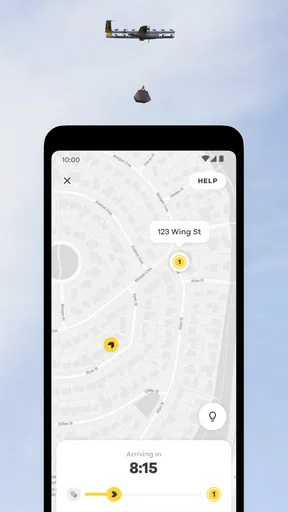
- Real-time order tracking helps you follow the drone’s progress.
- Contactless delivery reduces face-to-face interaction at drop-off.
- The app provides a modern, convenient alternative to short car trips.
- Drone delivery can reach homes quickly when local availability is good.
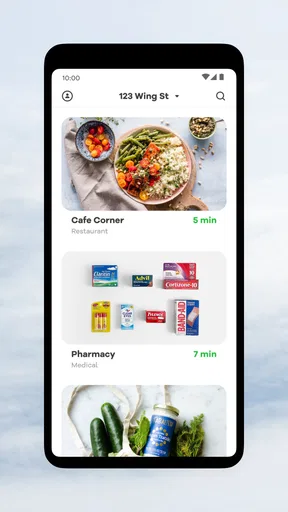
- Simple ordering makes eligible deliveries easy to arrange from your phone.
Limitations of Wing - Drone delivery
- Service is limited to selected neighborhoods and participating retailers.
- Weather conditions may delay or cancel scheduled drone deliveries.
- Payload limits restrict the size and weight of available orders.
- A suitable delivery area is needed for safe package drop-off.
- Availability, fees, and delivery times can vary by location.
Similar Picks in This Category
View All
SHEIN-Shopping Online
Roadget Business PTE. LTD.4.8

Amazon Shopping
Amazon Mobile LLC4.4


Mercado Libre: Compras online
Mercado Libre4.8

Wish: Shop and Save
Wish US Holdings LLC4.7

Alibaba.com - B2B marketplace
Alibaba Mobile4.4
Frequently Asked Questions
What is Wing – Drone Delivery, and how does it work?
Wing – Drone Delivery is a delivery service that uses autonomous aircraft to bring selected products from nearby businesses to your location. After entering your address in the app, you can browse available stores, place an order, and follow the drone’s progress on a map. When the aircraft arrives, it lowers the package carefully to a designated delivery area rather than landing on your property.
Is Wing drone delivery available in my area?
Availability depends on your exact location, local regulations, weather conditions, and the current Wing service network. The app generally checks your delivery address before showing participating stores and available products. Even if Wing operates in your city, service may be limited to certain neighborhoods or operating hours, so entering your address is the most reliable way to confirm whether drone delivery is currently supported.
What types of products can I order through Wing?
The product selection varies by location and participating retailer, but Wing commonly offers groceries, snacks, convenience items, pharmacy products, household essentials, and other lightweight goods. Each item must meet the service’s size and weight requirements before it can be transported by drone. The app displays the products currently eligible for delivery, so availability may differ from what the store offers for regular shopping.
How long does a Wing drone delivery take, and can I track it?
Delivery times can be considerably faster than traditional courier services, although the exact estimate depends on the store, order preparation, distance, air traffic restrictions, and weather. Once your order is accepted, the app typically provides status updates and tracking information, allowing you to see when it is being prepared, collected, and transported. Delays or cancellations may still occur when flying conditions are unsuitable.
Are Wing drone deliveries safe, and what happens when the drone arrives?
Wing drones are designed to operate autonomously while using onboard systems and remote supervision to navigate delivery routes. When the drone reaches the destination, it normally hovers above an approved drop-off location and lowers the package using a tether. You should keep people, pets, and obstacles away from the delivery area, follow the app’s instructions, and avoid attempting to touch the aircraft during the drop-off.
